Allow for expansion
HDPE expands about 12 × 10⁻⁵ per °C. A 1-metre strip grows about 1.2 mm for every 10 °C rise.
HDPE is a light, waxy, very tough polyethylene with broad chemical resistance. It machines easily and stays tough far below freezing, but it is soft and flexible compared with engineering plastics.
 HDPEPlastics
Figures from one named manufacturer or industry data sheet, compared with our other CNC plastics. See every material side by side in the property comparison.
*Heat deflection measured at 0.45 MPa, not the standard 1.8 MPa.
Data source: Ensinger TECAFINE HDPE natural (stock shapes; converted from psi and °F). Typical values, not guaranteed minimums.
Guide only. General ratings for prototyping, not a recommendation for your application. Filter every material by these needs.
Every material has trade-offs. Knowing them up front saves time and money.
Practical points to consider when you design a part in HDPE.
HDPE expands about 12 × 10⁻⁵ per °C. A 1-metre strip grows about 1.2 mm for every 10 °C rise.
Its toughness, low moisture uptake and easy machining suit conveyor and food-processing parts.
Like polypropylene, HDPE has a waxy surface that resists adhesives and paint.
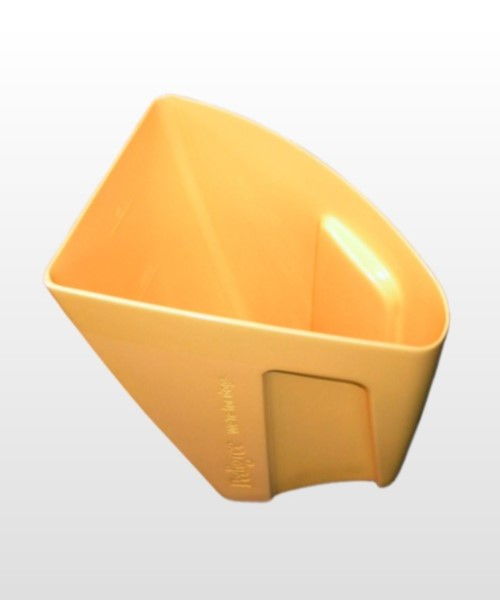
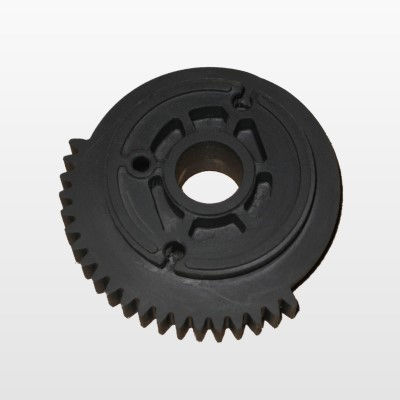
Food-processing and conveyor parts, wear strips and guides, chemical tanks and fittings, and appliance parts.
Compare them all in our material overview or narrow them down with the material selector.
Common questions about HDPE. Still unsure? Contact us or call +61 3 9764 2749.
Both are light, chemical-resistant polyolefins that are hard to glue. HDPE stays tough at much lower temperatures (brittleness temperature about −76 °C). Polypropylene is the classic material for living hinges.
Yes. At 0.95 g/cm³ it is less dense than water.
Ensinger gives a long-term maximum of about 120 °C, but its heat deflection temperature is only 75 °C at 0.45 MPa, so loaded parts should stay much cooler.
Please use this information as a guide only. It is a general rapid prototyping reference based on typical results, and many assumptions were made in producing it. It is not a recommendation for any particular application, so please don't use it for product design or engineering decisions. The final choice of process and material is yours; check critical properties with the material manufacturer's data sheets.
Upload your CAD files for a free, obligation-free quote.