
Meet the two materials
Acetal (polyoxymethylene, POM) is a hard, stiff, low-friction plastic with excellent dimensional stability. It comes as a copolymer (POM-C) and a homopolymer (POM-H, of which Delrin is the best-known brand). Nylon (polyamide, PA) is a tough, wear-resistant family; PA6 is the common machined grade, often supplied as cast or extruded stock. Glass-filled nylon adds stiffness and strength for structural parts.
Properties side by side
On paper, nylon 6 looks slightly stronger and stiffer. In service, the comparison depends on moisture: nylon’s strength and stiffness fall as it absorbs water, while its toughness rises. Acetal’s properties change very little with humidity.
Moisture and dimensional stability
This is the biggest practical difference. Acetal absorbs very little water and holds its dimensions well, so it suits precision parts: small gears, valve components, snap fits, bushes with close running clearances and fixtures. Nylon 6 absorbs about 1.3 percent water in 24 hours of immersion and up to around 9 percent at saturation, and grows as it does. A nylon part machined dry to a close fit can tighten or seize after weeks in a humid environment. If nylon is used in a precision fit, allow generous clearances or use a lower-absorbing grade.
Toughness and impact
Nylon is tougher and more forgiving of impact and shock loads, especially when conditioned with some moisture. It absorbs vibration and runs quietly. Acetal is harder and stiffer, which is good for precision but less forgiving of shock; notches and sharp corners in acetal should be avoided in impact-loaded parts.
Friction and wear
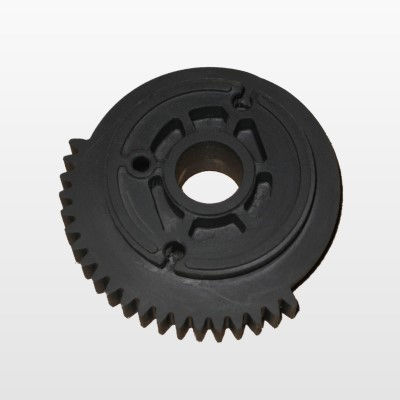
Both are self-lubricating and run well against steel. Acetal has a very low, consistent coefficient of friction and is excellent for sliding parts, cams and small precision gears. Nylon has outstanding abrasion resistance and copes well with heavier loads and gritty conditions, which is why it is common for wear pads, rollers, sheaves and large gears. Glass-filled nylon is stiffer but more abrasive to the mating surface.
Chemicals and environment
Both resist oils, greases, fuels and many solvents. Acetal is attacked by strong acids and oxidising agents; nylon is attacked by acids and absorbs water. Both are degraded by prolonged ultraviolet exposure unless UV-stabilised grades are used. Food-contact grades of both exist; specify them when needed.
Machining, bonding and finishing
Acetal is one of the best plastics to machine: it cuts cleanly with crisp edges and minimal burrs, and holds tolerances well. Thick homopolymer stock can show porosity at the centre of the rod, which matters for parts machined from the core; copolymer is less prone to it. Nylon machines well too, but can leave stringy chips and soft burrs, and machined parts move as they take up moisture.
Acetal is difficult to bond and does not hold paint well. Nylon can be bonded with suitable adhesives and can be primed and painted.

Where each is commonly used
| Application | Acetal is commonly used when | Nylon is commonly used when |
|---|---|---|
| Gears | Small, precise gears in dry or variable humidity | Larger, shock-loaded or quiet-running gears |
| Bushes and bearings | Close running clearances must stay stable | High loads, abrasion or poor lubrication |
| Rollers and wheels | Precision rollers and guides | Heavy-duty rollers, sheaves and wear pads |
| Snap fits and clips | Repeatable snap force is needed | Impact or abuse is expected |
| Fluid and valve parts | Low absorption and stable size matter | Usually avoided where size must stay stable in water |
| Structural brackets | Light loads, good stiffness | Glass-filled nylon for higher loads |
Our material pages for acetal, nylon and glass-filled nylon give sourced property data, and the material selector helps compare them with other plastics.
Because CNC machining needs no mould or die, the program that made your prototypes can also make the production batch. Runs of a few hundred parts go straight from approved prototype to production in the real engineering material, and a design change is a program edit rather than a new tool.


